The practice
How an appointment actually works
Most men arrive anxious and leave relieved. You do not need the right words for it, and you will not have to tell the story twice to two different people.
One appointment, not three referrals
A sexual difficulty can be almost entirely medical, almost entirely psychological, or some of each, and working out which it is in your case is the whole job. A man with erectile dysfunction may have early vascular disease, or performance anxiety, or both. The usual route is a GP for the first, a specialist for a second opinion, and a therapist months later for the part nobody asked about.
I am a GP, a sexual medicine specialist and a registered psychosexual therapist, so the assessment covers all of it in the same room: blood pressure and blood tests alongside a conversation about what is actually happening in your life. Not because the second is a consolation prize when the first comes back normal, but because there is no way to tell which it is without looking at both.
What the first appointment involves
- 01
A comprehensive first appointment
An hour, so there is room for a full exploration of the problem and the history behind it, and for an examination where that is useful. I arrange any blood tests or imaging directly.
- 02
The whole picture, not one slice
Hormones, cardiovascular and metabolic health, medication, mood, ADHD, relationships, and your erotic and sexual world. These interact, and looking at one in isolation is how men end up with four opinions and no explanation.
- 03
A shared understanding
I’ll tell you what I think is going on and how I got there, and I want to hear what you make of it — the ideas and concerns you came in with. We agree on the picture before we think about a way forward.
- 04
Then, and only then, treatment
Medication, psychotherapy, testosterone, EMDR, a change to something you are already taking, a referral, or sometimes simply knowing that nothing is wrong.
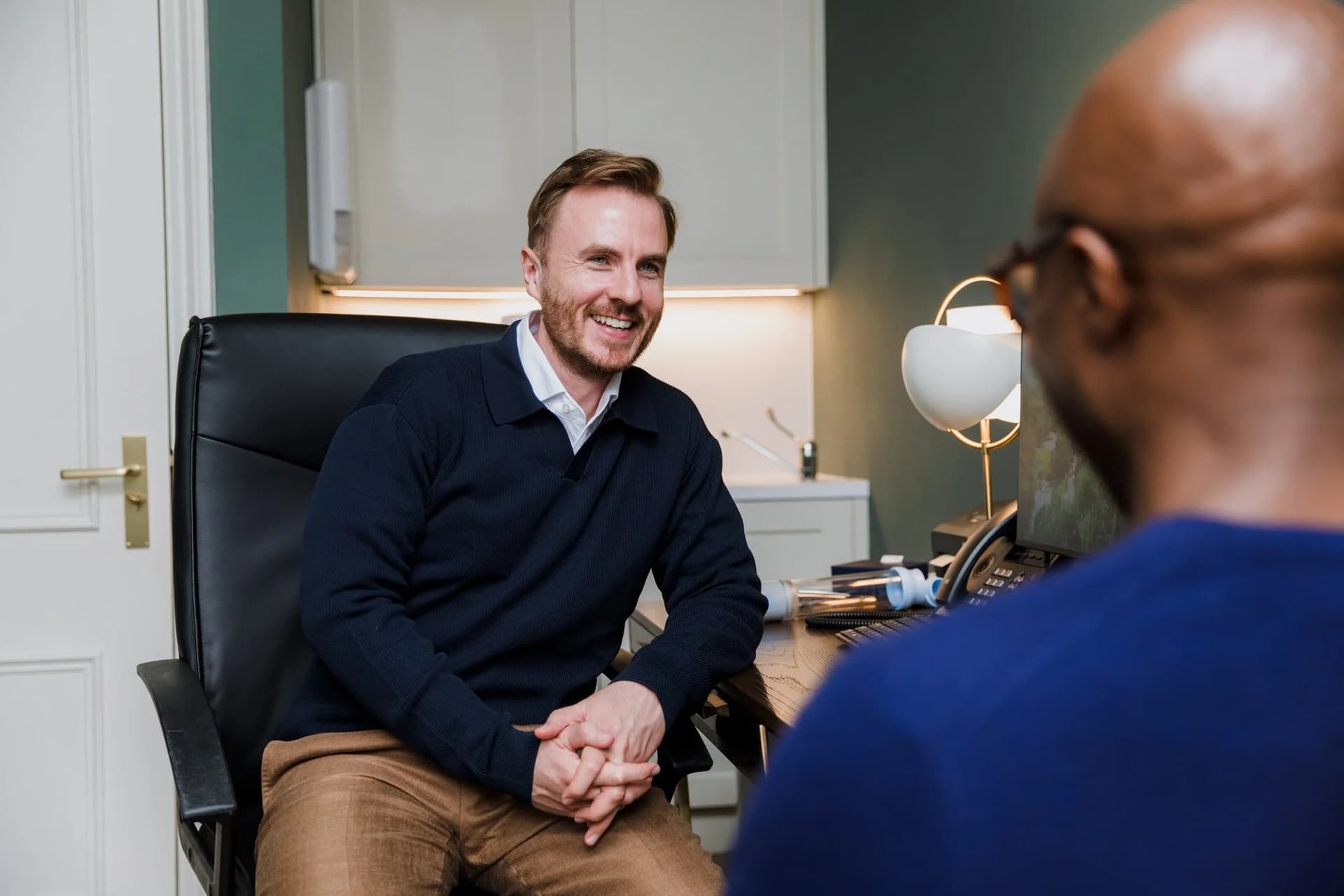
Most men have thought about how to explain what’s going on.
Some have never said it out loud to anyone, including their partner. Some have carried it for years. Some have already been rushed, dismissed, or handed a prescription by someone who didn’t ask a second question.
You don’t need to find the right words. However it comes out is fine. This is one of the most private areas of anyone’s life to put into words, I have heard a very wide range of it, and you are very unlikely to surprise me. You won’t be judged, and we have the time.
How I decide what to recommend
A private clinic can sell you a great deal you do not need, and much of this field runs on exactly that. My job is to work out with you what is likely to help and what is not, and where your energy and your money are best spent.
Tests and scans
I arrange an investigation when the result will change something, and not otherwise. I frequently see men who have spent thousands on screening packages and did not get the tests that would have told them anything, because they were offered what suited a clinic’s model. The principle is the right test for the right man at the right time. Nothing is arranged without my explaining the reasoning first, and I receive no financial benefit from any investigation I recommend.
Medication
I do not recommend anything I would not suggest to a member of my own family. A prescription can be appropriate and useful and is rarely the whole answer: where nobody has assessed what is driving the difficulty, medication alone often works less well than expected, or stops working. I take no margin on anything I prescribe, and the medication prices on the fees page are what the pharmacy charges.
Where the standards come from
Where there is a recognised standard, I follow it rather than my own preference. Testosterone deficiency is the clearest example and the one where men are most often misled. Diagnosis and treatment follow the international, European and British guidelines. In practice that means at least two morning blood tests rather than one, free testosterone and SHBG as well as the total, and symptoms weighed alongside the number. A good many men arrive having been told by an online clinic that their testosterone is low when it is normal.
The therapy I actually do
Where the work turns out to be psychological, it is not one method applied to everybody. I use Acceptance and Commitment Therapy, which is about changing your relationship to a difficult thought rather than arguing with it; Compassion Focused Therapy, developed specifically for shame and self-criticism, which is a great deal of what arrives here; EMDR, where an earlier experience is still anchoring a present difficulty in a way that talking about it does not reach; and the Developmental Model of Couples Therapy, where the difficulty has become part of how a relationship works. In practice these get combined. The work is shaped by what is actually going on, not by a fixed protocol.
Practical things worth knowing
You do not need a GP referral
You can book directly. If you would like me to write to your GP afterwards I will, and if you would rather I did not, that is equally fine and needs no explanation.
Appointments can be remote
Video appointments are available for first consultations as well as follow-ups. In person is better where you can manage it, since I can examine you and bloods can be taken the same day, but there is no requirement to come in, and a great deal does not need it.
Nothing is written down that does not need to be
Clinical records are kept securely and confidentially, and what goes in them is what is clinically relevant. You can ask at any point what I am recording and why. I use an AI scribe to help write up consultations and will ask your consent before using it. If you would rather I did not, I will write the notes myself and nothing else changes.
Partners are welcome, and optional
Some people come on their own, some with a partner, some with partners, and some start alone and change their mind later. All of those work, and none of them needs arranging in advance.

What men say about my care
Verified patient reviews, collected and published by Doctify. They update themselves as new reviews arrive, and nothing here is selected by me.
The first appointment is the one that takes nerve. After that, it is just an appointment.
Sixty minutes for a first consultation, or thirty if you would rather start smaller. Every fee is on the booking page.