


SEXUAL DIFFICULTIES & SEXUAL HEALTH
Integrated medical and psychosexual care for men — from a specialist who treats the whole picture.
A different kind of sexual health consultation
Sexual difficulties are common, often complex, and still surprisingly hard to get proper help with. Most men who come to see me have already tried something — a prescription from their GP, or a quick reassurance that everything looks fine on a blood test — and found it wasn't enough.
The reason is that sexual difficulties rarely have a single cause. Erectile problems, low desire, ejaculation difficulties and painful sex almost always involve an interaction between physical factors (hormonal, vascular, neurological), psychological factors (anxiety, shame, history, expectations) and relational ones. Treating one dimension in isolation usually produces limited results.
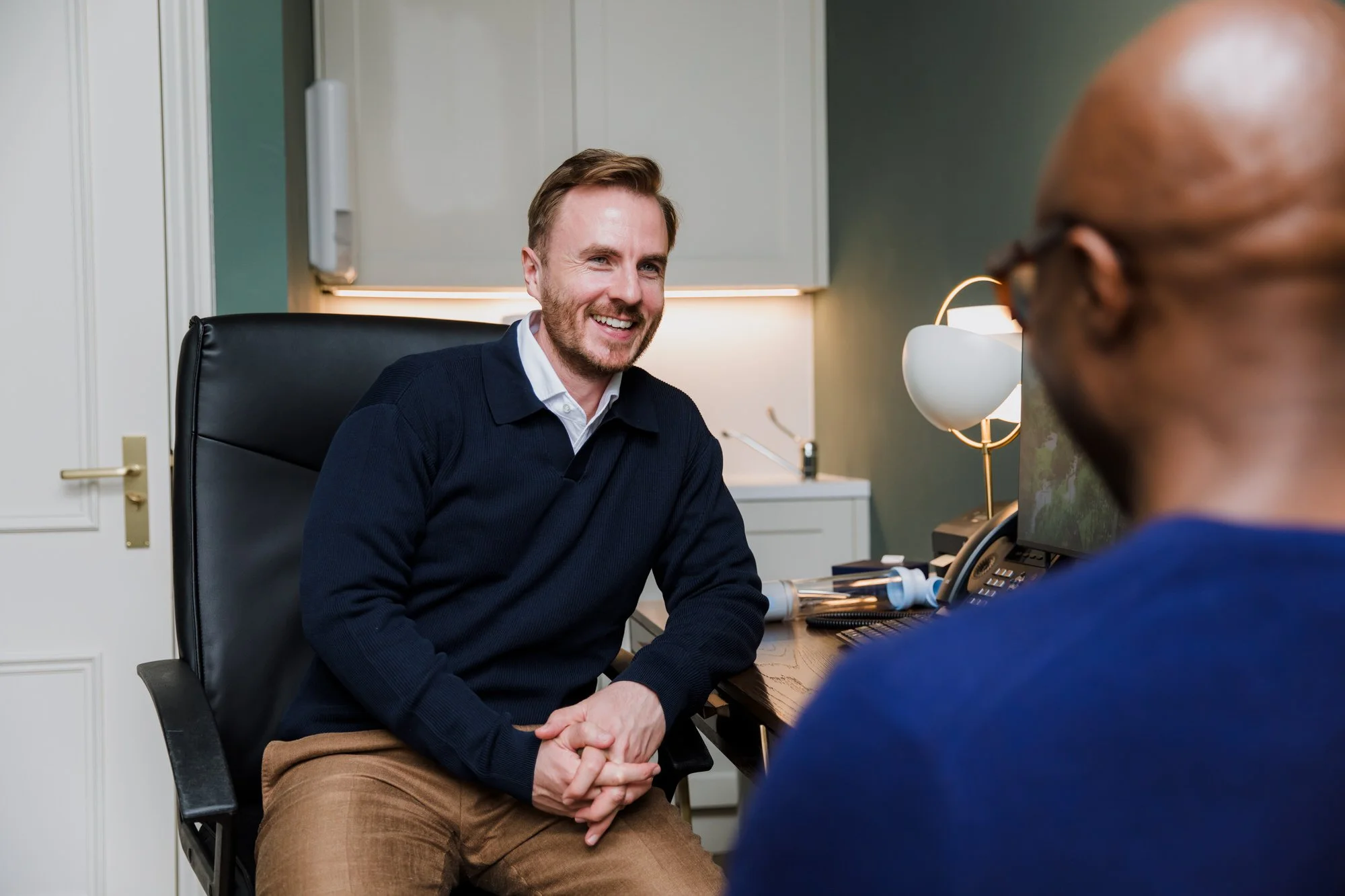
I'm Dr Ben Davis — a GP, Fellow of the European Committee of Sexual Medicine (FECSM) and COSRT-registered sex and relationship therapist. I assess and treat sexual difficulties from all three dimensions, in the same clinical relationship. You don't need separate referrals to a urologist, a psychologist and a therapist. You can work through it with one person who understands all of it.
What I can help with
Erectile dysfunction Difficulty getting or maintaining an erection — whether this happens sometimes, often or always. I assess the hormonal, vascular and psychological contributions and treat accordingly, rather than defaulting to a prescription.
Low sexual desire Loss of libido or interest in sex, whether it's always been low or changed over time. Causes include hormonal imbalance, relationship dynamics, depression, medication side effects, and more — I work through all of these.
Premature ejaculation Coming sooner than you or your partner would like. One of the most treatable sexual difficulties, but often poorly managed. I use both medical and behavioural approaches depending on what's driving it.
Delayed or absent ejaculation Difficulty reaching orgasm or ejaculating — during partnered sex, masturbation, or both. Often under-recognised and undertreated. Can be hormonal, neurological, psychological or medication-related.
Painful sex (dyspareunia & anodyspareunia) Pain during sex — including anal pain, genital pain, and pelvic floor-related pain. I assess the physical and psychological causes and coordinate treatment including pelvic health physiotherapy referral.
Compulsive sexual behaviour Feeling that sexual thoughts or behaviour are out of control — sometimes called "sex addiction," though the evidence for that framing is complex. I work with this carefully, without shame and without assuming abstinence is the goal.
Differences in desire between partners Mismatched libido is one of the most common relationship difficulties. I work with individuals and, where appropriate, couples, on understanding and navigating desire discrepancy.
Performance anxiety Anxiety about sexual performance that creates a self-reinforcing cycle — common after an initial episode of erectile difficulty or ejaculation change. Highly responsive to the right psychological approach.
Sexual difficulties after illness, surgery or medication Including after prostate cancer treatment, antidepressant use, cardiovascular disease, pelvic surgery or other medical conditions. Sexual rehabilitation is an underserved area that I take seriously.
How I assess sexual difficulties
A thorough initial assessment takes time — which is why sexual difficulties consultations are typically 60 minutes. In that time we'll explore:
Your medical history, current medications and relevant physical health — including cardiovascular, hormonal and neurological factors. Where needed I can arrange blood tests, hormonal profiles or cardiac assessment.
Your psychological history and relationship with sex — including previous experiences, anxiety, self-image, shame, trauma and expectations.
Your relationships and current sexual context — including partner dynamics, communication, and what sex means to you.
Your erotic world — this includes what you find arousing, what feels satisfying, and what you'd like to be different. This is often the part of a sexual health consultation that gets left out, and it matters.
From this I'll give you a clear formulation — a shared understanding of what's contributing to the difficulty — and a personalised treatment plan.

TREATMENT OPTIONS



Treatment depends entirely on what's found in the assessment.
It may be medical, therapeutic, or a combination — which is often the most effective approach.
Medical treatments I offer or coordinate:
PDE5 inhibitors (sildenafil, tadalafil) — with proper dosing guidance, not just a prescription
Testosterone therapy where clinically indicated
Intracavernosal injection therapy (alprostadil/Caverject)
Topical treatments — hormone gels, anaesthetic sprays, urethral preparations
Low-intensity shockwave therapy
Referral to a urologist, andrologist or colorectal surgeon where surgical assessment is appropriate
Psychosexual and relationship therapy:
Sensate focus and sex therapy techniques
Cognitive approaches to performance anxiety and sexual shame
Acceptance and commitment therapy
Compassion Focused Therapy
Work on desire, arousal and erotic development
Couples therapy and communication around sex
Referral to clinical psychology or psychiatry where needed
Frequently Asked Questions
-
No. Most consultations are with individuals initially. If you're in a relationship and your partner is very welcome to come with you but this is entirely your choice and never required.
Sometimes after an initial consultation I might suggest couples therapy and to bring your partner in.
-
Not automatically. A prescription for a PDE5 inhibitor can be appropriate and useful, but it's rarely the whole answer. If the underlying cause hasn't been assessed, medication alone often doesn't work as well as expected, or stops working. I'll always assess what's actually driving the difficulty first.
-
NHS GPs are generally limited to 10 minutes, and most haven't had specialist training in sexual medicine or psychosexual therapy. I have both, and I have time to assess things properly.
-
This varies considerably. Some patients resolve things in two or three appointments; others benefit from longer therapeutic work. After the initial assessment I'll give you an honest sense of what's realistic.
-
Yes. Everything is confidential. Updating your NHS GP is your choice, not a requirement.
-
Yes I see couples for both assessment and therapy. Please mention this when booking so I can allocate appropriate time. Sometimes a longer initial assessment is useful.
-
Yes. Sexual rehabilitation after cancer treatment, pelvic surgery or other illness is an area I take seriously and have specific experience with.
-
Most people are, at least initially. This is one of the most sensitive areas of a person's life to discuss. I've heard a very wide range of concerns and experiences — you're very unlikely to surprise me, and you won't be judged.

READY TO TALK?
Sexual difficulties are rarely just physical and rarely just psychological. Getting the full picture assessed properly — by someone with training in both — makes a real difference to outcomes.